Wednesday, July 17, 2024

Everything Everywhere All At Once

Today is my wedding anniversary with Mrs. Collector. We have nothing planned, because:
  • My mother in law might also have cancer and had to go to the hospital for tests today. No one else is around to take her and stay with her, so my wife did. And now she's tired.
  • The relentless, oppressive "heat dome" was supposed to subside today. It has not. I saw the forecast and told my daughters that I would take them to the park and Friendly's after I got home from work today. LOL. LMAO, even.
  • My wife had stomach issues this morning when I left for work, and she's having trouble keeping down most of her food, so an anniversary dinner would be a bad idea even if we could afford it. Which we can't because we just bought a couch to replace the one we bought 12 years ago and give her a comfortable place to rest. It's not here yet.
  • I'm in a mood anyway because the only other person in my department has been out on vacation all month (she returns tomorrow -- I think?) and the customers have been especially annoying and dumb lately. I would really like to tell these idiots to pay electronically or kick rocks, but I can't get fired. Need the insurance because I'm giving myself diabetes and high blood pressure.
  • Oh, and my wife asked my daughters which aunt/uncle they would stay with if something happened to both her and me... and they separately gave her the same answer. Awww hell no. I'm living forever ... was my response. But, given the rapidly declining health of my family, the planet, our country's politics, etc... it's a struggle.

And so, I take refuge in my own personal oasis. The thing that has acted as my safe space since my alcoholic father terrorized my mother 37 years ago. Cards. And that part of my life has gone fairly well.

I requested shipping on my latest COMC order in early May.
I placed a small order at Sportlots in late June.
I placed two orders at Cardbarrel the second week of July.


All of these orders arrived at the same time. That happened to be the same day that my daughter helped me assemble my brand new bookshelf.

..which I'd bought with a gift card earned from finishing 2nd (out of about 115 entrants) in a company town hall trivia contest. I considered buying some baseball cards with the free cash but the two blasters in my cart (2023 Stadium Club and 2024 Topps Heritage) totaled the same price. I chose the bookshelf over roughly 100 new cards because organizing my card room has been a nice distraction from all the personal and general despair.

Plus, I already had plenty of new cards coming my way.


I'd like to show them off, but my old printer/scanner finally bit the dust. The printer didn't print and the scanner kept scanning fuzzy. So I bought a new printer/scanner with a prior gift card:

I followed the instructions to install the printer, and that's when I encountered a problem. The software requires a modern version of Windows - something from the past dozen years or so.

My computer, which was purchased before my daughters were born, still runs fine. It also runs Windows 7.

Did I ever mention I went to school with that girl? Anyway.. to illustrate how old Windows 7 is, I first saw this commercial during Brett Favre's return to Green Bay as the Vikings QB. In 2009.

All of this is to say I will be borrowing a lot of TCDB scans for the foreseeable future - which is fine for the Athletics series or another round of All-Time Teams. It's not so great for showing off new purchases.

Here's a look at the first Cardbarrel order. These pictures were taken with my phone, it's the best I could do:


I loaded up on Red Sox commons to fill out some of my binders (now that I have more shelf space..)


Of course I picked out some non-Sox as well:


I have a bit of a Terry Francona PC and I enjoy picking up Expos/Blue Jays cards in O-Pee-Chee and ('80s)Leaf sets.


Some substitutions at the top of this one. I did not order a '94 Bowman Kenny Rogers; that was an unannounced replacement for a '94 Donruss Red Sox card. Same for the 1993 Fleer Tim Salmon, which replaced a 1993 Finest Mike Greenwell. :/

This order pushed my reward points past 2,000 so I had a gift code coming. Since the big order was still 'processing' I decided to spend the free cash quickly, in hopes that both orders would arrive at once.

Indeed they did. I made a list of the 'free' cards - before remembering my gift code was for slightly more than $20.

The Sportlots order took a couple weeks to arrive from Saskatchewan. The two cards at the bottom left arrived damaged, but I left the seller positive feedback anyway because I'd fallen so far behind on Sportlots orders that I copy/pasted "A+++ thank you very much!" for every purchase I made this year.

And then there's COMC. A day after receiving yet another $5 apology coupon my order shipped. It arrived two months after I used my prior apology coupon and requested shipment.

On top of that, they mislabeled one of the cards I purchased.

Here's a couple '56 Topps cards from the order. You'll notice the Tommy Carroll is a PSA 8. I definitely didn't buy a PSA 8. No way is there room in the budget for a high-grade Yankee; I had to settle for a PSA 4 with HOFer Early Wynn. 


See? I sensibly ordered an EX-MT 6 and... wait... zoom in on that scan...


COMC sent the right card, they just listed it wrong. Which I guess the seller didn't notice either, or they would have asked for 3-4x more. I only have a handful of PSA 8s in my 1956 Topps set build, and none are Yankees or Dodgers. Until now.

My CA ebay seller friend is sitting on $80 for me to spend, and I asked him to grab a Young Guns RC of a top-ten goal scorer in the NHL. He made an offer that was declined, then the seller ended the listing and reopened it at a significant markup. (This move is also known as "The JoelshitShow".) But now he feels bad I missed out on the card and he's making it his mission to secure the star RC for me.

If and when that happens I'll be sure to show it off here. If not, I don't think I'll have anything new coming in for a while because... one month from now, right after my birthday... there's a bigass card show about an hour away.


Thanks for reading!


~


Saturday, July 13, 2024

The Kansas City AAAs

Philadelphia's American League franchise entered its 50th season -- and its first of the post-Connie Mack era -- in the spring of 1951. New manager Jimmy Dykes led the A's to an 18-win improvement over the '50 squad. The team improved again in 1952, finishing in fourth place with a 79-75 record.

The Athletics would not finish above .500 or higher than sixth place in the AL until they got to Oakland 16 years later. Today we'll revisit the cross-country journey of this beleaguered franchise in Part II -- The Kansas City AAAs.


Throughout the 1950s, several franchises moved out of cities with a more popular team in town: the Browns conceded St. Louis to the Cardinals, the Braves conceded Boston to the Red Sox. Philadelphia had one franchise with five World Series victories and eight league crowns, and one franchise with a single pennant and no championships. One team had ended a franchise-worst streak of 13 sub-.500 seasons with three straight winning campaigns, while the other sputtered through a 30-year stretch in which they posted a winning record once.
 

The Athletics and Phillies, playing home games at what would soon be called Connie Mack Stadium, finished the 1949 season with identical 81-73 records and near-identical attendance figures. The NL's Phillies had been the lesser franchise on the field yet crucially maintained strong support and turned the corner at the right time.
 

The Phillies rode a talented group of young stars all the way to the World Series in 1950. Four Phils finished in the top seven in NL MVP voting that year. Relief ace Jim Konstanty won the award after earning 16 wins and a league-high 22 saves (which wasn't an official stat until 1969.)

In 1952, both Philly franchises had a starting pitcher lead their league in WAR (another stat not considered at the time). Hall of Famer Robin Roberts went 28-7 with a 2.59 ERA for his 4th-place Phillies. Over in the AL, Bobby Shantz notched a 24-7 record with a 2.48 ERA for his 4th-place A's. Roberts finished a close second to the Cubs' Hank Sauer for NL honors; Shantz became the Athletics' fifth and final AL MVP in Philadelphia.

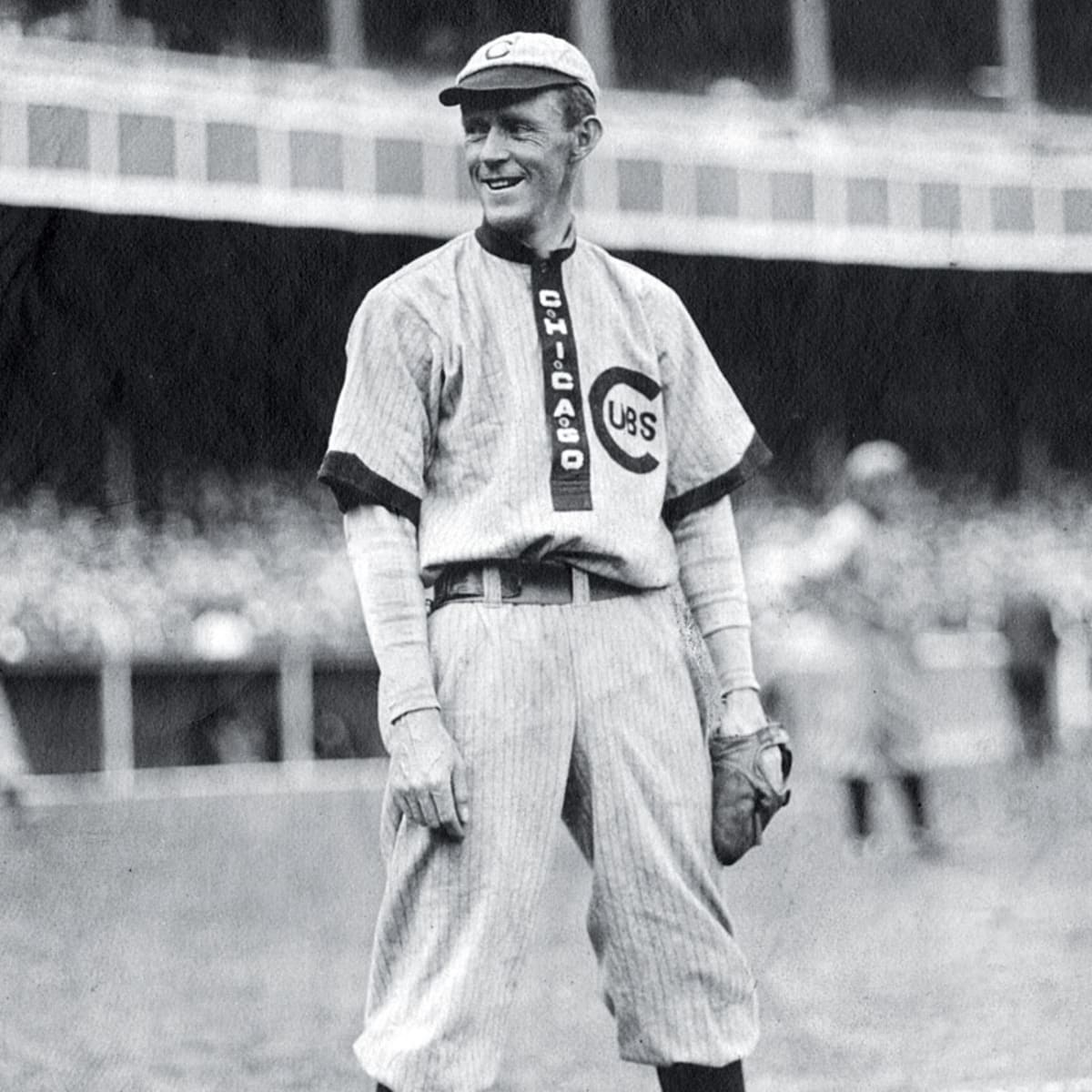
Shantz was also the smallest player ever to win MVP honors. At just 5 '6" and 140 lb, he was about 25 pounds lighter than current Astros superstar Jose Altuve. Johnny Evers earned NL MVP honors in 1914 despite weighing a ghastly 125 lb - though he was three inches taller than Shantz.

1952 proved to be a "dead cat bounce" season for Shantz and the Athletics, as both the team and its diminutive ace regressed in 1953. All-Star Gus Zernial smacked a career-high 42 home runs, finishing one behind AL MVP Al Rosen for the league lead. However Zernial had little protection in the lineup and the pitching staff was mediocre, despite boasting the previous year's MVP and Rookie of the Year. 

source


Connie Mack was in his nineties and the franchise was severely in debt. Attendance at the stadium that bore Mack's name was sparse.

While many locals called for the Mack family to sell the team, the city organized a “Save the A’s” campaign in the summer of 1954 when it became obvious the Athletics were at risk of being sold and moved, putting the onus on the fans to support the club and keep it in Philly.


Sound familiar? The Athletics were soon sold to Arnold Johnson, who promptly relocated the club to Kansas City.


Prior to purchasing the club for $3.5 million, Johnson had close ties to the New York Yankees as the owner of both Yankee Stadium and Blues/Municipal Stadium in Kansas City - home of the Yanks' top minor league team. Yankees brass strongly supported Johnson's bid to buy the A's and reportedly undermined a last-ditch effort to keep the team in Philadelphia. Johnson sold both ballparks to avoid an *ahem* ... conflict of interest.


Hall of Famer Lou Boudreau was hired as manager for the '55 season and skippered the squad to modest improvement. Zernial rebounded from an injury-plagued 1954 season to lead the team with 30 home runs and Vic Power earned the first of his six All-Star selections with a stellar sophomore season, setting what would be career highs in batting average(.319), home runs(19), and slugging %(.505)


Pitching was still a problem, as the A's ranked dead last in team ERA for the second year in a row. Young hurlers Art Ditmar, Arnie Portocarrero, and Art Ceccarelli (triple "A"s) were clearly overmatched. [On a less relevant but more personal note, Ceccarelli is one of a handful of pro athletes from my hometown and the only major league baseball player who attended my high school.]
 
Spare a thought for poor Alex Kellner, who won 20 games and earned All-Star honors as a rookie with the 1949 Athletics, finished second to Browns slugger Roy Sievers in ROY voting, and followed that up with a 20 loss season in 1950.


Kellner was not valuable enough to be acquired by a top-tier club for a pennant run, nor was he lousy enough for the perpetually penny-pinching A's to cut loose in favor of younger, cheaper pitchers. He was just cromulent enough to stick around for nearly a decade until mercifully being released in 1958. Naturally, his final two seasons - with the Reds in '58 and the Cardinals in 1959 - yielded his best single-season ERA and WHIP totals, as he was used primarily in relief.

The 1958 Athletics finished 19 games back of the Yankees for the AL crown with a not so bad 73-81 record. It was the first time the team had won 70+ games in Kansas City. Yankee castoff Bob Cerv had a career year in '58, finishing 4th in AL MVP voting with 38 home runs, 104 RBI, and a .305 average. The pitching staff - anchored by former Yankee Ralph Terry and former Yankee Bob Grim - still ranked in the bottom tier, but with a much-improved team ERA of 4.15 compared to the atrocious 5.35 ERA three years earlier.

Kansas City's lineup was paper thin aside from Cerv and Power. Infielder Hector Lopez trailed only Cerv with 73 RBI and ranked third among A's in home runs and slugging %. Finishing ahead of him was a promising young right fielder. You might have heard of him...


Roger Maris made his first All-Star Game in his first (and only) full season with the Athletics - who had lost the services of Lopez and Ralph Terry when the Yankees came calling. Maris and starting infielders Kent Hadley and Joe DeMaestri would soon follow them to the Bronx.


Let's play devil's advocate for a moment. The Yankees got little out of Hadley and DeMaestri. Roger Maris hit 16 home runs and batted .273 in '59. No one could have predicted that he'd win the AL MVP award in each of the next two seasons while outslugging Mickey frickin' Mantle with a combined 100 home runs from '60-61.

In return, Kansas City received pitcher Don Larsen, who had a down year in '59 but was still an effective starter, Norm Siebern, a left handed hitting corner outfielder who batted .271 with 11 home runs for the Yanks and - like Maris - was entering his prime, Marv Throneberry, who was a marginal upgrade over Hadley at first base, and Hank Bauer... who was 37 and no longer an everyday starter. 
 
The A's weren't even the first team to trade the future home run king; they'd acquired him from Cleveland in a deal that featured Vic Power.

Counterpoint: it was the Yankees. Again. During Arnold Johnson's six seasons as A's owner the team swapped players with the Yanks an astounding 14 times. Kansas City did come out on top in a couple deals but on balance these trades decimated the Athletics and prolonged the Yankee dynasty.

Johnson passed away before the 1960 season began, but the two teams kept trading. That season the A's lost 96 games and finished in last place with a roster comprised mainly of Yankee scraps and future Hall of Fame managers.


Johnson's estate sold the franchise to Charlie O. Finley, who had not yet secured controlling interest in June 1961, when the A's shipped their All-Star pitcher Bud Daley to -- you guessed it -- the Yankees.
 
After their 16th trade in seven seasons, Finley vowed that the Athletics would no longer be New York's farm team. He did not promise that the Athletics would no longer be a farm team. 

Two expansion franchises joined the AL in 1961, and the 154-game schedule swelled to the 162-game season still in place today. K.C. finished tied with the new Washington Senators for last in the A.L. with 100 losses - nine games behind the other expansion squad, the Los Angeles Angels of Los Angeles.

Siebern and 29 year-old rookie pitcher Jim Archer were the only players on the 1961 A's above replacement level. Both expansion squads had at least one pitcher who would have been the A's ace. Both expansion squads had five players with double-digit home runs; the Angels had three players with a higher OPS than Kansas City's best player.


Hank Bauer was named player-manager during the '61 season and retired as a player at season's end. In his first (and only) full season as Kansas City's skipper, the team improved to 72-90, finishing 9th in the AL. Finley fired Bauer after the 1962 season; he would lead the Baltimore Orioles to three straight 94+ win seasons and a World Series title within four years.

Kansas City and Baltimore swapped first basemen after the 1963 season, with Siebern rejoining Bauer for the '64 and '65 campaigns. The financially struggling A's received $25,000 cash and Jim Gentile, who was named to every AL All-Star team from 1960-62. Unlike Siebern, Gentile wouldn't be the lone bright spot in a lackluster lineup. Finley also acquired slugging outfielder Rocky Colavito from the Tigers.

source

After finishing tied for last in the AL with 95 home runs in 1963, the A's nearly doubled that total in 1964 with their two new stars leading the way. The team actually got worse as a shortened rotation taxed the previously passable pitching staff. Another 100-loss season and last place finish ensued. But this was actually fortuitous for Finley and the Athletics, as major league baseball would introduce the Amateur Draft in 1965. 

The first pick in the first-ever MLB draft belonged to the Kansas City Athletics, who selected Arizona State outfielder Rick Monday.


Baseball fans in Kansas City had hoped that having an owner who wasn't colluding with another club would turn the team's fortunes around, yet Charlie Finley fared no better than a saboteur. In fact Finley feuded with city officials and had attempted to move the team out of town as early as 1961. In 1964 he signed an agreement to move the A's to Louisville, Kentucky - but was overruled by the other team owners.

Attendance at Municipal Stadium had surpassed 1 million in the team's first two seasons. By 1965 it was halved. Colavito had been shipped to Cleveland after just one year in Kelly green. Once again the franchise's fortunes looked bleak - though brighter days were finally on the horizon. Promising young players were making their way through the Athletics organization, including Bert Campaneris and John "Blue Moon" Odom in 1964, Jim "Catfish" Hunter in 1965, and Monday and Sal Bando in 1966.

During the 1965 season, Kansas City's woeful pitching staff got a boost from two future Hall of Famers. The first was Hunter, who pitched 133 innings as a 19 year-old rookie. The second HOFer started K.C.'s second-to-last home game, pitching three scoreless innings against the Red Sox.

source

At age 59. What's more unbelievable: a 59 year old pitcher, a 59 year old pitcher with a 19 year old teammate, or a 59 year old pitcher and his 19 year old teammate both ending up in Cooperstown?!?

"Satchel Paige Day" was a gimmick, but a successful one. The day prior, Hunter had shut out the Red Sox in front of 2,304 fans. Two days earlier, the A's beat Washington 8-7 before an intimate gathering of just 690 spectators (John Fisher hasn't sunk his A's that low -- yet.) The team's final home game was attended by 2,874 patrons. Satchel's start attracted 9,289 paying customers - one of the largest crowds of the 1965 season.

In 1966 the Athletics fully embraced a youth movement, as manager Al Dark handed the ball to a starter under the age of 25 in over 70% of the team's games. The best of the bunch appeared to be Jim Nash, who finished second in Rookie of the Year voting after a 12-1 season in which he posted a tidy 2.06 ERA.

The light-hitting lineup was young, too, with only one starter (third baseman Ed Charles) older than 26. Utility man Roger Repoz was the only Athletic to reach double figures in home runs, with 11 in 319 at-bats. The A's wouldn't stay powerless for long, however. 
 
In the league's second-ever Amateur Draft, Kansas City possessed the second overall pick. After the Mets selected catcher Steve Chilcott first overall, the A's selected another outfielder from Arizona State.


We'll check in with this young man...


...and this young man...


...and this young man.. in the next installment of Saturdays With the A's. I hope you'll join me for Team of the '70s coming soon.


Thanks for reading!


~

Monday, June 17, 2024

English Snow

 A heat wave is boiling most of the country this week, but I've got a little bit of Snow here in NJ.

I bought this card from my California friend. I was scrolling through his store to see how many of my cards were listed and this Alex English jumped out at me. The centering and surface were about as clean as you can expect for an '86-87 Fleer sticker. 

There's no snow on this card (unless you count the mountains on that glorious Nuggets jersey) but B shipped it with this:

There's a story behind the inscription - which my friend shared with Snow at a Bay Area FanFest. Back in our high school days, we played a lot of wiffle ball -- and baseball video games. At some point we created an expansion team of good-not-great players and introduced each player when it was our turn to bat.


B remembers this better than me, but apparently in one of those old video games (MLB '99 maybe?) the play-by-play announcer had some unique introductions for players that didn't exactly fit their IRL reputation. And so, he asked J.T to sign this card as "The ever so dangerous J.T. Snow"

The longtime San Francisco Giant is coaching in Oakland this year... with the Oakland B's


The Ballers are an independent Pioneer League team competing against mostly mountain west teams in Montana, Idaho, and Colorado. I don't recognize anyone on their roster, but they have a female pitcher.


Go Kelsie, and Go Ballers!


Thanks for reading!


~

Saturday, June 15, 2024

Saturdays With The A's - Mister Mack


Connie Mack.
The $100,000 infield.
Double X.
Charlie O. Finley.
Reggie Jackson and the Swingin' A's.
Rollie Fingers' mustache.
Rickey Henderson's speed.
The Bash Brothers.
Billy Beane's Moneyball.


This summer, The Collector says farewell to an iconic franchise in a six-part series titled Saturdays with the A's. Next year, the franchise begins a temporary residence in Sacramento before moving to their fifth home city, Las Vegas, for the 2028 MLB season.  


Today we'll revisit the Philadelphia years in Part I -- Mister Mack.


The Oakland Athletics are currently playing their 57th - and final - season in the Bay Area. Their stay in Philadelphia was nearly as long, lasting for 54 years until the team moved to Kansas City for the 1955 season.


The Athletics were one of eight franchises forming the American League in 1901.

Under 38 year-old manager Connie Mack, the Athletics finished fourth out of eight teams with a 74-62-1 record. The '01 team had two Hall of Famers: left-handed pitcher Eddie Plank and second baseman Napoleon "Nap" Lajoie. Let's talk about Nap for a bit.

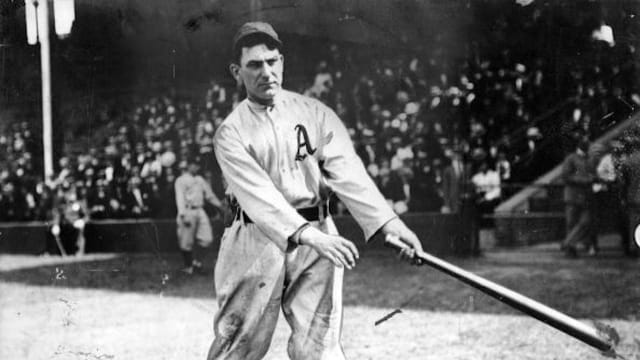
The National League - where Lajoie began his career with the crosstown Phillies - was seen as superior to the upstart AL. Lajoie was the new league's biggest star; in 1901 he won the Triple Crown and led both leagues in hits, runs scored, on-base percentage, slugging, and batting average with a .426 mark -- a modern-day record that no one in the AL or NL has matched since. 

Philadelphia improved to 83-53-1 in 1902 and won the American League pennant - one year prior to the birth of the World Series. Their star slugger was... not Nap Lajoie. His old NL squad had sued to reclaim their "property", so the "property" agreed to play for Cleveland starting that year (as a stipulation, Lajoie couldn't even play in Philadelphia as a visiting player). Nap was such a significant asset to the Cleveland squad that they named the team after him for the duration of his tenure there.

While the circumstances surrounding Lajoie's departure were unique, the Athletics losing a legendary player in his prime would be a recurring theme of the franchise's entire 124-year history. 

Connie Mack's squad pressed on in the aughts, building a formidable pitching staff around Plank, eccentric lefty Rube Waddell, and Charles "Chief" Bender -- antecedents of Hudson, Mulder, and Zito. 

The A's were the second AL team to play in a World Series, losing to the Giants in 1905. Pitching would be the team's bread and butter until the end of the decade, when Eddie Collins emerged.

While Collins never hit .400 in a season or won a batting title, he would eventually surpass Lajoie as the all-time leader in hits and WAR among second basemen. Collins also holds the position record for most stolen bases with 741 (8th all time), and his six World Series victories are the most of any MLB player who never played a single game for the Yankees.

The first half of the 1910s belonged to the Athletics, as the team won back-to-back World Series titles in 1910 and 1911, then added a third in '13. Mack's men posted six straight 90+ win seasons from 1909 to 1914, balancing out the stellar pitching of Plank, Bender, and Jack Coombs with a powerhouse lineup. Five of the A's eight starting fielders batted .310 or better in '11 including 20 year-old Stuffy McInnis, a 5' 9", 160-lb first baseman who compiled over 2,400 hits and 1,000 RBI in his career - but managed just 20 total home runs.

That home run total would be surpassed in just two seasons by the A's third baseman, Frank Baker, who led the AL in round-trippers each season from '11 to '14 - earning him the nickname "Home Run."


Baker combined with McInnis, Collins, and shortstop Jack Barry to form the $100,000 infield - which doesn't sound impressive in 2024 where even John Fisher pays his players several times that amount. But back then, it was a nickname meant to convey the infield's value to a dynasty in the making. 

Philadelphia's penny-pinching owner didn't agree, and refused to raise Baker's salary for the 1915 season. He also sold Eddie Collins to the White Sox for $50,000, sold Barry to the Boston Red Sox for $10,000, and lost pitchers Plank and Bender to the brand new Federal League.

Who was that cheapskate, you ask? 

Oh.

Yes, Mr. Mack also owned the Athletics and had a direct role in roster construction. So when a rival league emerged and player salaries escalated, Mack the owner left Mack the manager little to work with. If you thought the 1997 Marlins fire sale was bad... imagine a 3x World Series winner and 4x pennant winner (let's say the Astros) selling off their top stars within a year and falling from first place to dead last in the entire AL. Now imagine that Astros team losing 56 more games than the year prior. 

Despite the exodus, the '15 A's weren't completely bereft of talent. McInnis and catcher-outfielder Wally Schang were still around, and Mack brought back Nap Lajoie to replace Collins. It wasn't nearly enough. Philly's American League squad hit rock bottom a season later, winning just 36 games in 1916. (For comparison, the A's also won 36 games in 2020 - in a 60-game season.) 

Astoundingly, Mack did not fire his manager after six consecutive last-place finishes, giving Mack a chance to rebuild the Athletics from the ground up. And Mack did exactly that in the 1920s, crawling back into contention slowly until 1925, when the 88-win A's finished second to Washington in the AL.

The resurgent Athletics finished second two more times in the '20s, trailing the "Murder's Row" Yankees by 19 games in 1927 and 2.5 games in 1928. Then they won the next three American League pennants and completed their rebuild with World Series titles in '29 and '30.

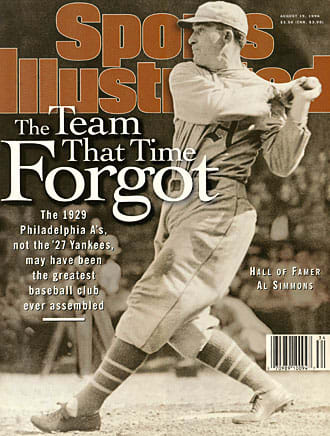
Connie Mack had restocked the roster with quality pitching (led by Hall of Famer Lefty Grove) and exceptional offense. Hall of Famers Mickey Cochrane and Al Simmons emerged in the mid-'20s, supported by .325 hitters Jimmy Dykes and Bing Miller. Max "Camera Eye" Bishop had a low batting average but a very high on-base percentage as he often collected more walks than hits.

But the final piece of the puzzle, the slugger who helped them leap ahead of the Ruth and Gehrig-led Yankees was a young first baseman named Jimmie Foxx.

A powerful right-handed hitter, Foxx debuted in 1925 as a 17-year old catcher. He played sparingly in '26 and '27 before earning the full-time first base job two years later. "Double X" led the AL in on-base percentage and finished top-five in batting average, slugging, OPS, home runs, and runs scored while starting a streak of twelve 30+ home run seasons.

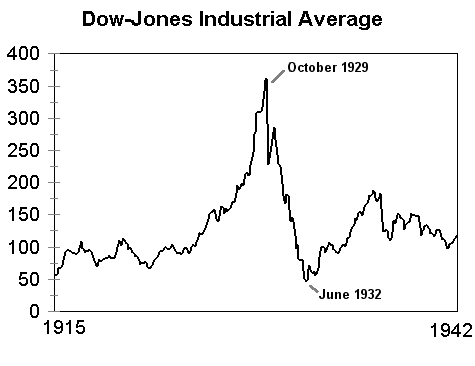
This Athletics team was built to last, and without a rival league competing for players and driving up salaries, Mr. Mack could keep his stars well into the next decade....unless there was some major economic catastrophe crippling the country in the early 1930s. 

Oh.

Mack sold Al Simmons, Jimmy Dykes, and sacrifice hit king Mule Haas to the White Sox for $100,000 - not a complete surrender considering Dykes was on the back nine of his career and the A's had "Indian" Bob Johnson ready to replace Simmons in left field. Philadelphia finished second in 1932, third in 1933... and then Fire Sale III occurred.

With the United States experiencing nearly 25% unemployment in late 1933, baseball tickets became a luxury few could afford. As revenues sank, team owners like Mr. Mack were forced to slash expenses. As a result, Lefty Grove and Max Bishop were sold to the Red Sox, while Mickey Cochrane was traded to the Tigers for a far less accomplished catcher and $100,000 cash. 

Spare a thought for poor Bob Johnson, who finally made the big club as a 27 year-old in '33, only to watch nearly all of the surrounding stars sold or traded away. He remained with the A's until 1942, enduring eight consecutive 90-loss seasons as the A's floundered at or near the bottom of the AL. After a year with the second-place Senators, Johnson concluded his career with the Red Sox as a placeholder while Ted Williams served his country in World War II. Johnson's retirement after the 1945 season coincided with Ted's return; Boston won the pennant in 1946. 

Connie Mack would continue to manage the Athletics through the post-war years of the 1940s, but there would be no Mini-Dynasty III. In the twenty seasons from 1935 to 1954 - their final year in Philly - the Athletics would post a winning record twice: 1948 and 1949. 

TIL Nellie “single X” Fox began his career with the A's

Connie Mack was still managing the team at 86 years old (take that, Tony LaRussa). He had somehow squeezed 81 wins out of a team with Alex Kellner as the "ace" of the pitching staff, and an offense led by Eddie Joost, Elmer Valo and Sam Chapman. He managed one more season - a disastrous 1950 campaign that saw the A's drop back to the basement - and then passed the baton to his former third baseman Jimmy Dykes. Mack had given the franchise absolutely everything he had. 

As an acknowledgement of a half-century of service, Shibe Park was renamed Connie Mack Stadium in his honor. The team would soon leave the 45 year-old park and head west...


We'll follow the team to their second home in the second installment of Saturdays with the A's. I hope you'll join me for The Kansas City AAA's next month. 


Thanks for reading!


~


Wednesday, June 12, 2024

One More

One more set completed:

This Brett Hull RC(which I still swear is airbrushed) was the last card I needed for 1988-89 Topps, the first hockey cards I encountered as a kid. After a couple months of browsing Brett Hull RCs at $15-20 each I came across a 65-card lot of the "Golden Brett" for $6.95 + shipping.


Sitting right on top of the stack was a slightly off-center Topps RC. Everything else was a bonus.

The back of the RC is pretty bad. I might have to upgrade someday.

I set these aside as keepers and I'll send the rest to my eBay seller friend B, as a thank you gift. My latest purchase from B is a 1986-87 Fleer basketball sticker of a Hall of Famer. That should arrive this weekend. 


My active set builds are nearing an end. Among the three remaining hockey cards needed to finish three different hockey card sets is one more Brett Hull. I wasn't expecting this lot to have his 2003-04 Topps Lost Rookie Cards insert... and it didn't.


B has been a fan of the Oakland A's since we were high school classmates in Connecticut. I hope he's able to go to another game or two by the end of this season. If he does, I'll ask him to take some pictures for the conclusion of my Athletics series... which will debut this Saturday. (I'm already working on part II.)


I've got one more idea for a series. It's a big one. But I might have to wait until September. I'm not sure how many people would want to read a daily series this early in the summer. 


My goal is to reach 700 posts by the end of this year. I'm 44 away, and if both series are completed according to plan, that will cover 38 of them. It would be nice to hit 100 followers too, but I don't see that happening. I just hope there's a few of you still around to read the next six posts...


Thanks for reading!


~


Celebration Preparation

 Most of the Anniversary gift packages should be arriving tomorrow so I wanted to post this before you open them up...  These numbered packs...