Saturday, September 28, 2024

Moneyball

On August 17, 1999 the Oakland Athletics walloped the Boston Red Sox 12-1, moving them one game back of Boston for the AL Wild Card lead. Ah the good old days when there was just won wild card team per league. 

The next day, Kevin Appier took the mound for Oakland. GM Billy Beane had acquired the 31 year-old ace three weeks earlier in a risky trade deadline deal. Beane had shipped out veteran starter Kenny Rogers days prior, seemingly giving up on their postseason chances. Rogers was the highest-paid player on the A's, taking up nearly 20% of the team's payroll. Appier was a few years younger and about a million dollars cheaper. However, Rogers was a free agent at the end of '99 whereas Appier was under contract for 2000.

I was at my girlfriend's house checking my fantasy team on Yahoo around the time of the trade. Huh, Appier's on Oakland now? I thought to myself.   

Oakland lost to Boston on August 18th and played barely above .500 the rest of the way. The Red Sox were the best team in the AL from that day forward and won the Wild Card by seven games over the A's. 

There was no prize for being the 5th-best team but it was an impressive finish for a roster with the 5th-lowest payroll in the majors. Billy Beane was building the best bang-for-your-buck ball club possible, supplementing his young stars with undervalued veterans. Walks and on-base percentage were emphasized; stealing bases was practically outlawed.


In the 2000 season, 41 year-old Rickey Henderson swiped 36 bags for the Mets and Mariners - placing him in the major league's top ten for the 18th time in his legendary career.

That same season, the Athletics finished dead last among all 30 major league teams with 40 stolen bases. Total. The team leader was 37 year-old infielder Randy Velarde with nine. This wild bunch of beefy sluggers was anything but athletic.

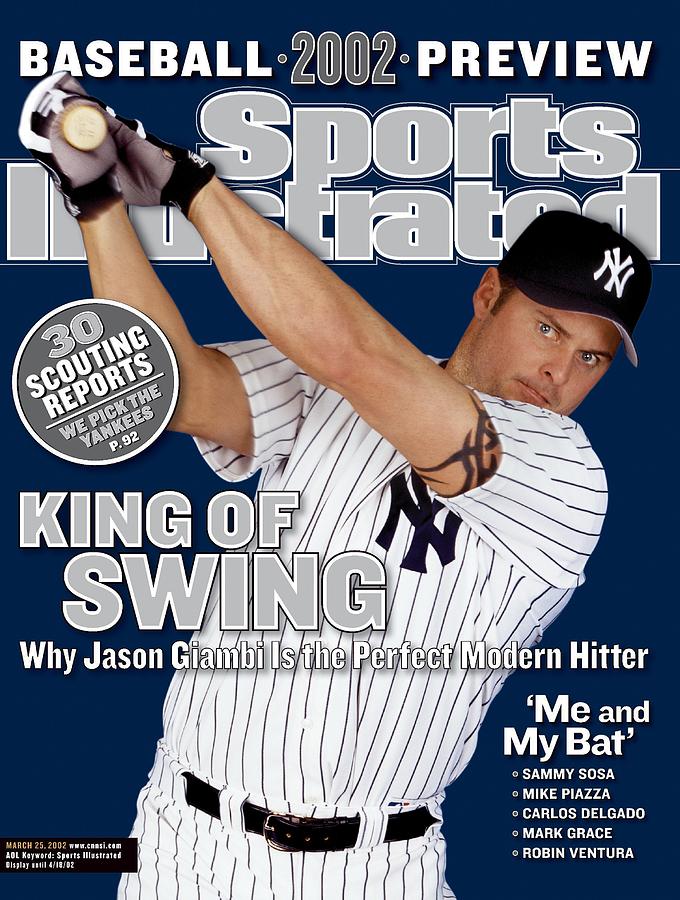
The archetype for Oakland's resurgent squad was first baseman Jason Giambi.

Giambi was the leader of a young Oakland squad teeming with talent - shortstop Miguel Tejada kicked off a three-year streak of 30 home run, 110-plus RBI seasons, culminating in an MVP campaign two years later. Eric Chavez earned the starting third base job at age 21 and would post 30-homer, 100-RBI seasons of his own in '01 and '02. Ben Grieve, the 1998 AL Rookie of the Year, had his best season in 2000.

No one drew more walks or reached base at a higher clip than Giambi, who led the majors in both categories and was named American League MVP.

Oakland's 91-71 record in '00 was a modest improvement but it was enough to win the division for the first time since 1994 realignment left the AL West with just four teams. Young hurlers Tim Hudson, Mark Mulder, and Barry Zito were emerging around veterans Kevin Appier and Gil Heredia. After eleven playoff-less seasons Appier would make his first postseason start against... aww hell. 

Gil Heredia out-dueled Roger Clemens in Game 1. Appier lost his first postseason start in Game 2. Tim Hudson did the same in Game 3. The A's teed off on Clemens and Dwight Gooden in Game 4. And then the Yanks hung a six-pack on Heredia in the first inning of the clincher. (Games 1 and 5 were the only two times Heredia was handed the ball in a playoff game over his ten-year career.)

The A's present a problem. If they can win on a paltry payroll in a second-tier city with a third-tier building with fourth-tier attendance, then what's wrong with everybody else?

Entering the 2001 season, half of MLB's 30 teams played in stadiums that were brand new or opened in the previous dozen years. Oakland's home was over 35 years old - and attendance had barely budged since the 1994 strike. 

"Sometimes I look out there and think, I had bigger crowds in Pony League," Giambi says of the atmosphere in Oakland. "Honestly, if we can't draw this year, we need to get out of Oakland. There's no reason people shouldn't come out and watch the A's this year."

Oakland's attendance did improve in 2001, breaking 2 million for the first time since 1993. Yearly attendance stayed above that mark until 2006, when the A's drew 1,976,625. Not coincidentally, the team finished first or second in the West each of those six seasons.

In '01 the A's had the second-best record in all of baseball at 102-60. Unfortunately the league's best team was also in their division. As a result, Oakland didn't even have home field advantage in the first round. They had to travel across the country for their Wild-Card matchup against... oh, come on.

This time was going to be different. No more Gil Heredia garbage. The A's have aces now.

Their lineup was equal or better than the Bronx Bombers, and they even had a genuine lead-off man. Billy Beane, sensing he needed someone who could run, shipped out out Ben Grieve (at peak value) in a three-team swap that netted him pitcher Cory Lidle, second baseman Mark Ellis, and speedy center fielder Johnny Damon.

On paper, this team could beat the Yankees. This team should beat the Yankees. And they did.. 

In Game, 1 Mark Mulder outdueled Roger Clemens (who never beat the Athletics in the postseason)

In Game 2, Tim Hudson pitched eight shutout innings and Jason Isringhausen closed the door.

In Game 3, Barry Zito held the Bronx Bombers to one run on two hits over eight innings. Sweep.


Except... we know the A's didn't win that game. We know the A's didn't win that series. And we know why -- because Billy Beane had one too many Giambis on his roster and not enough athletic players who could f*cking run

This is where Moneyball begins. This is the play, the series, the season that begins to illustrate how impressive Beane's work has been. Despite the enormous payroll disparity, the A's have now come within a run or two of eliminating the mighty Yankees in consecutive postseasons.


2002 will be the breakthrough for sure. Ain't that right, Jason?
 

Uhhhh... Jason?

Welp, that does it. The Yankees are definitely more than two runs better than the A's now. Might as well crown 'em champs again.
 

This is the year that made Beane a legend. This is why Michael Lewis wrote a book about him and why Brad Pitt played him in the big-screen adaptation of said book.

This team lost Jason Giambi, Johnny Damon, and Jason Isringhausen... and they got better. One win better, but still - good enough to win the West, and good enough to host(!) the ALDS. No home field advantage for you Yanks this time... Game Five's gonna be in Oakland!!

Uh, Yanks? ...You coming?

....

They lost?!?! To the Angels??!? Oh man, this is definitely Oakland's year!!


The A's last best chance to win a title was squashed by a team the commissioner wanted to eliminate from existence. A team that wouldn't win another postseason series for 21 years.

"you can have it back when you win a playoff game"

Oakland climbed back to the top of the AL West in 2003. They had home-field advantage in the ALDS, and got out to a 2-0 series lead against the Red Sox. Game 3 went to extra innings, with Boston winning in 11. [I'm glad they did, cause my friend and I had tickets to Game 4.]

Games 4 and 5 were one-run nail-biters. Boston won 'em both.

Four straight years the A's made it to the playoffs. Four straight years they pushed the ALDS to Game 5. Four straight years they lost the deciding game by one or two runs. At home, on the road, with Giambi, without Giambi. Against the greatest franchise in pro sports, against a team that was nearly contracted, against a team that was infamously cursed. Didn't matter. 

Oakland was never going to win a playoff series under such imbalanced economic conditions.


Hahahahaha take that, Twinkies.

The A's finally reached the ALCS again in 2006. First time since '92. Bring on the Yankees.

The Tigers?!? Didn't they just lose like a thousand games in a season?

The 2006 A's had just a couple players remaining from the early aughts. Hudson, Mulder, and Tejada were gone. Eric Chavez was still around; Beane had identified him as the most irreplaceable player for his middle-of-the-order bat and Gold Glove defense at a premium position. Chavez signed a six-year, $66 million extension that would keep him in Oakland through 2010. To this day it's the most expensive contract in Athletics history.

Oakland's most productive hitter in '06 was a 38 year-old DH who had missed large chunks of the '04 and '05 seasons with injury and was therefore available at a bargain price that new owners Lew Wolff and John Fisher could live with.

Frank Thomas had a comeback season for the ages, leading the A's with 39 home runs, 114 RBI, and a .545 slugging percentage. The "Big Hurt" finished fourth in AL MVP voting, a remarkably high ranking for a DH.

Thomas, Chavez, and left fielder/goofball Nick Swisher were no match for Detroit's sterling pitching staff which featured 23 year-olds Justin Verlander and Jeremy Bonderman - along with 41 year-old Kenny Rogers. The Tigers boasted a balanced lineup with stars such as Magglio Ordonez, Curtis Granderson, Placido Polanco, and Ivan Rodriguez. Detroit won all four games, none of which were particularly close.
 
Hall of Fame manager Jim Leyland handed the ball to Bonderman - whom the A's had drafted in 2001 - for Game 4, a bit of delicious irony considering Billy Beane was so furious with his scouts for selecting the :gasp: high school pitcher that he threw a chair against a wall and traded him the first chance he got. Whoops.

As mentioned in the Moneyball movie, Beane saw managers as fairly disposable. He fired Art Howe after an exceptional 103-win season, replaced him with Macha, and fired Macha after reaching the ALCS.

Bob Geren took over as skipper for the 2007 season, lasting longer than Macha despite the A's failing to finish above .500 in any of his five seasons at the helm. During the 2011 season, Geren was fired and replaced by another Bob (and I thought we were running out of Bobs...)

TIL Bob Melvin - not Tony LaRussa - has managed the most games, earned the most wins, and reached the playoffs more times than any manager in Oakland Athletics history (Connie Mack owns all the franchise records.) Considering what he had to work with -- and who he had to work for -- he might be the most underrated manager in the 21st century.


We'll say hello to this guy...


and this guy...


and these guys...


...before we say goodbye to the Athletics when Saturdays with the A's concludes in October.


Thanks for reading!


~


Saturday, September 21, 2024

Records, Rebuilds, & 'Roids

After winning the 1989 World Series, the Oakland Athletics entered the 1990 amateur draft with four of the first 36 picks. They were awarded Milwaukee's #14 overall pick and the #36 pick as compensation for 38 year-old DH Dave Parker signing with the Brewers.

Atlanta had the #1 overall pick, and they were considering Todd Van Poppel, a high school phenom regarded as the best pitching prospect available. Van Poppel's agent was just starting to assert himself. His client did not have to go to a team that had lost 92+ games in four of the previous five seasons. His client did not have to accept a paltry signing bonus or accept a minor-league assignment. This upstart firebrand agent insisted that Van Poppel receive a record signing bonus and a major-league contract.

Atlanta balked at Scott Boras's demands and chose a shortstop instead. Some guy named Larry. The Athletics agreed to pay top dollar for Todd Van Poppel, who fell to them at #14. Boras landed his client the best contract, with the best team in baseball. Oakland drafted pitchers with every one of those four first round/compensation round picks. They were arming themselves for a dynasty. 

The A's aging roster needed an infusion of young talent. Jose Canseco couldn't stay out of trouble and Mark McGwire couldn't stay healthy. GM Sandy Alderson was suddenly losing his touch; only one of Oakland's 263 draft picks from 1989 to 1993 compiled over 10 WAR in the major leagues. Had any one of these pitchers panned out, the A's might have extended their contending window well into the 1990s.

It wasn't just Van Poppel, Kirk Dressendorfer, Don Peters, and Dave Zancanaro that failed to develop. But it is notable that, once upon a time, Oakland acquired a top-tier client of Boras Corp. when other teams balked at their asking price.

Oh, and that one draft pick over that half-decade who hit? He was a California kid who had a lot in common with the Bash Brothers he would eventually succeed...


Earlier this week, Dodgers star Shohei Ohtani became the first player ever to hit 50 home runs and steal 50 bases in the same season. In fact Ohtani is just the sixth player ever to accomplish a 40/40 season. Ronald Acuna did it last year after the introduction of pizza box bases. Alfonso Soriano did it in 2006 without any notable advantage. Two guys broke 40/40 in the 1990s - Barry Bonds and Alex Rodriguez. No one had suspected either star was using PEDs at the time. But that first guy who did it... well,

There had always been some suspicion that Canseco was using steroids. Not so for Mark McGwire, at least not in Oakland. When he obliterated the rookie record with 49 home runs in 1987 - the highest single season total for any player in the '80s - no one accused him of juicing. 

When injuries cost him nearly two seasons in the middle of his career, no one accused him of juicing. 

When he bounced back in the second half of his career with unprecedented power, it was seen as proof that he wasn't cheating. This power didn't come out of nowhere like Brady Anderson or Sammy Sosa. Mac had 49 homers as a rookie! He was always this good, he just needed to find ways to stay healthy.

He wasn't so good in 1991, however. While Canseco continued to mash, tying the Tigers' Cecil Fielder with a major league-leading 44 long balls, Mark managed just half that. His 22 homers and .201 batting average were career lows. Mac's struggles, along with the  pitching staff's collective 4.57 ERA (second-worst in MLB) were among the reasons Oakland finished fourth in the A.L. West with an 84-78 record.

Perhaps the most memorable moment of the otherwise disappointing 1991 season was their legendary leadoff man Rickey Henderson stealing a record-breaking base against his former team:


Over 36,000 fans attended a Wednesday afternoon game at the Coliseum to witness history; only an estimated 4,500 had witnessed his first major league stolen base a dozen years prior. Attendance at Athletics games totaled over 2.7 million in 1991, the second-highest total in franchise history. In fact the five highest single-season attendance totals in Athletics annals were all within this era - topping out at just over 2.9 million in 1990.

The peak years of the Rickey Henderson/Bash Brothers reign ended in 1992, after one more A.L. West crown. McGwire rebounded with 42 homers and an A.L. leading .585 slugging percentage. However it was his teammate who took home league MVP honors.


Nope, not him.

Not Jose, either. In fact, the Bash Brothers were broken up in a blockbuster trade that sent Canseco to the Texas Rangers for fireball reliever Jeff Russell, starting pitcher Bobby Witt (Sr.), and right fielder Ruben Sierra.


The AL MVP and Cy Young awards went to closer Dennis Eckersley, who ended the '92 season with a major league-leading 51 saves to go with his 7-1 record and 1.91 ERA. Two years prior, Eck had earned 48 saves and allowed just five earned runs all season for an absurd 0.61 ERA [and ERA+ of 603]. He finished fifth in Cy Young voting that year - second among A.L. closers and third among pitchers on his own team

The Canseco trade was stunning, but understandable. Wiit and Russell instantly became two of Oakland's youngest pitchers while Sierra was seen as a better all-around player and (hopefully) less of an off-the-field distraction than this guy.

Considering the history of this team, one might assume that this was a cost-cutting move. Surely Jose must have made much more money than the three players combined.. right? Surprisingly (to me at least) it was Sierra's salary that was higher; the Puerto Rican star earned $5 million in 1992 - $700,000 more than Canseco, and more than any MLB player not employed by a New York-based team. [Hold that thought.]

Athletics owner Walter Haas - who bought the team from Charlie Finley in 1980 - did what no owner of this team has been willing to do before or since. The A's took on more salary in trades, offered more money to secure the rights to top draft prospects, and kept the rest of their core intact. As proof that the A's had no plans to shed payroll, Haas and Alderson rewarded their remaining Bash Brother with a 5-year contract on Christmas Day 1992.

However, their opponent in that year's ALCS, the Toronto Blue Jays, had even more resources thanks to record-shattering attendance at their state-of-the-art home, the SkyDome. The Blue Jays bested Oakland in six games and went on to win their first of back-to-back World Series titles. They even borrowed Rickey Henderson for their '93 run, as the A's dropped all the way to last place in the West with a 68-94 record.

Rickey would return for the 1994 season, but it wasn't enough. McGwire's body was breaking down as he missed most of 1993 and half of 1994 with injuries. Eckersley followed up his MVP season with a below-average '93 campaign. Veteran starters Ron Darling and Bob Welch posted an ERA over 5.00, as did 21 year-old rookie Van Poppel, who walked more batters than he struck out in both '93 and '94.

The A's were one game back of the A.L. West lead on August 12,1994, albeit with a 51-63 record. Total attendance was about half of the nearly 2.5 million the team enjoyed just two seasons prior - not bad considering the team was playing sub-.500 ball for the second year in a row and lost 25 home dates to the strike.

When the players returned in 1995, attendance dipped all around the league. Oakland failed to draw 1.2 million fans in '95 and '96, their lowest yearly figures since 1980. The offense was still headlined by Mark McGwire, Rickey Henderson, and Terry Steinbach - along with 30 year-old OF/DH Gerronimo Berroa. Jason Giambi was called up in May and split time between first base and third.

With the team languishing in last place as the '95 trade deadline approached, Oakland sent Sierra to their old friends the Yankees for slumping slugger Danny Tartabull.

The pitching was falling off a cliff. Ron Darling and Dave Stewart both called it a career after finishing the '95 season with ERAs north of 6.00; Stewart's was nearly 7.00. Oakland selected 25 year-old Cuban Ariel Prieto fifth overall in the June draft - then rushed him right to the big leagues in July.

Van Poppel was second among A's pitchers with 122 strikeouts over 138 1/3 innings. His control improved somewhat, with a 1.308 WHIP that led all Oakland starters. But his 1996 season was atrocious and the A's cut bait on the former top prospect. 

Near the end of the '95 season, Walter Haas passed away. At a time when fans and management were still bitter toward the players, losing an owner who was willing to keep up with top-spending teams was a knockout blow. The financial disparity between "rich" clubs and "poor" clubs only worsened post-strike. Oakland, under new ownership, slid into the latter category.

In 1995, the Athletics had the seventh-highest team payroll in the majors at nearly $36 million.
In 1996, Oakland's team payroll was third lowest, behind only the Royals and Expos, at $19.4 million.

Rickey Henderson signed with San Diego. Newly-acquired Tartabull was flipped to the White Sox. Manager Tony LaRussa left for the Cardinals. So did Dennis Eckersley. 

The '96 A's were younger, cheaper, and... better. New manager Art Howe got career years out of third baseman Scott Brosius (.304 avg, 22 HR), DH Berroa (36 HR, .876 OPS), 34 year-old catcher Steinbach (35 HR, .871 OPS), and that McGwire guy.

Big Mac set new career highs with a .312 batting average, 116 walks, and 104 runs scored. He also led the majors in on-base percentage, slugging, OPS, and home runs with 52 - the highest single-season total since 1977. McGwire finished seventh in A.L. MVP voting. (What can I say, It's the '90s.)

The A.L. West was becoming a battle royale in the second half of the 1990s, with the talent-rich Mariners and Rangers taking turns at the top. Anaheim finished second three times. 

Oakland was falling behind. Changes needed to be made.

Terry Steinbach left for his hometown team the Twins as a free agent, but the A's reacquired Canseco in a trade with the Red Sox. The starting rotation was still butt. But the scouting department was getting its mojo back. Prospects were on the way, including outfielder Ben Grieve - the 2nd overall pick in 1994.  

Sandy Alderson ceded GM duties to his assistant Billy Beane, but not before making one more massive move.

Entering the 1997 season the talk around Oakland revolved around Mark McGwire's pursuit of the single-season home run record held by Roger Maris. Big Mac launched 52 bombs in 130 games the year prior; if he could stay on the field for 25 more games or so... he could do it. 62 was possible.

On July 31st the A's were 42-68 - dead last in the American League. McGwire would turn 34 at the end of the season and, more significantly, he would be a free agent. Oakland already had his successor in house - a guy who, while taken under McGwire's wing, had bulked up too much to play third base or left field.

Rather than lose him for nothing, Alderson and the A's traded Mark McGwire to St. Louis for.. practically nothing. He did indeed break Roger Maris's single-season home run record.

He became the biggest draw in baseball, packing stadiums all across the league. St. Louis was the epicenter of baseball's revival. Oakland wasn't even a stop on the tour.

Billy Beane was tasked with the job of building the post-McGwire Oakland Athletics on a shoestring budget. Under Alderson, the team had emphasized an analytics-based approach to scouting called sabermetrics. As a new millennium neared, Beane would use this ethos to extract maximum production out of a young, talented roster making minimal salaries.


We'll check in with this guy...


 ...and this guy...


...and this guy...


.. and these guys..


...as Saturdays with the A's returns next week with Moneyball.


Thanks for reading!


~

Thursday, September 12, 2024

Failing at math, failing at geography

It's 1965.

Major League Baseball has 20 teams.
Pro football - across both the NFL and AFL - has 22 teams.
The NBA, in its 16th season, has 9 teams.


The National Hockey League, in its 48th season of operation, has 6 teams. 


Hockey is a very regional sport, and it would be understandable to believe that the sport would only appeal to residents of Canada and the northernmost parts of the U.S. 

But broadcast money is a big deal in other sports. The NHL is missing out. They can appeal to a wider audience nationally if they're on US TV. If they're on US TV, more fans will see the game and want a team in their area. More exposure, more teams, more money. (Oh, and more jobs for players I guess...)


The NHL announces plans to double the size of their league: six new teams will be added in 1967, to coincide with the league's 50th anniversary. Over a dozen cities across North America apply for teams.


Aside from the politics of satisfying pre-existing relationships, the league has to consider cities with the broadest appeal. Baseball's westward expansion to Los Angeles and San Francisco was a success - large, growing populations hungry for pro sports teams. The state of California has a population of over 18 million in 1965; surely some small fraction of them would support pro hockey.

Having a cross-country presence is admittedly a big swing. The NHL wants to make some headway in the national sports landscape, particularly in winter months when baseball and football are over. But there are major media markets in the northeast that, you know, have winter.

Pittsburgh and Philadelphia make sense. Natural rivalries with New York (and each other) and plenty of sports fans. Expanding the NHL's footprint in a major population center? Check. Traditional ice hockey-weather cities? Check. Pleasing friends and partners of existing NHL owners? Check.

Two teams out west, two teams out east. Now to fill in the center of the map... and we can't forget about


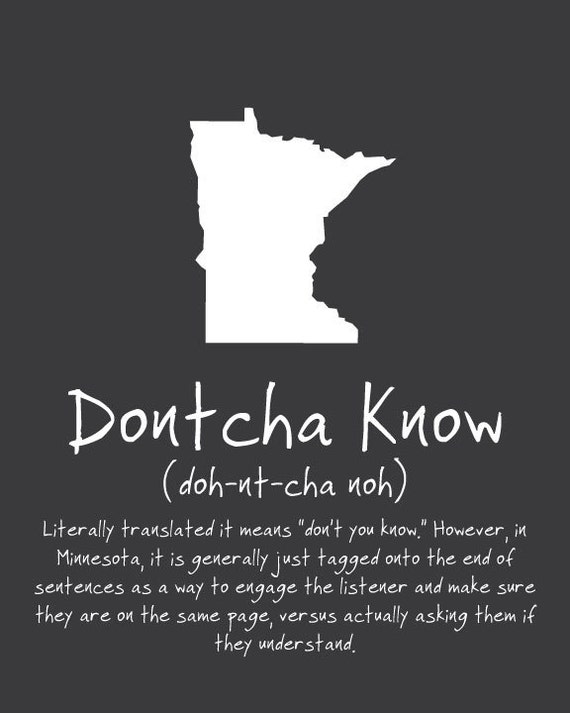
Minnesota. It's the state of hockey, dontcha know. How could an NHL team possibly fail here?


St. Louis has a strong pro sports tradition and a venue in place - which happens to be controlled by the owners of the closest existing team, the Chicago Black Hawks. It's a favor, but a sensible one.


Cross-country coverage complete. 

What's that? The south?!?


You're kidding right? There's no interest. California is one thing, but let’s be real. Where could the National Hockey League possibly put a team? Texas? Florida? Pssh. That would never work.

Splitting these teams into two divisions along geographical lines should be simple. It should probably look something like this:

East - Boston, Montreal, Toronto, New York, Philadelphia, Pittsburgh
West - Detroit, Chicago, Minnesota, St. Louis, Los Angeles, San Francisco Oakland

Sounds good, yes?


This would be unfair to the incoming teams, who would struggle to make the playoffs for the foreseeable future if they had to compete against long-established squads. So instead we'll split the teams thusly:


East - Boston, Montreal, Toronto, New York, Detroit, Chicago
West - Philadelphia, Pittsburgh, Minnesota, St. Louis, Los Angeles, Oakland

The extra travel might be rough for some teams(especially the Pennsylvania clubs) but the expense will be offset by playoff revenue. Four brand new expansion squads will be guaranteed to make the postseason. One expansion team will be guaranteed a berth in the Final. Everyone is happy.


Well, almost everyone...


Western Canada gets left out in the cold. The NHL passes on a strong expansion bid by a group from Vancouver. Naturally, the fans blame Gary Bettman. Sure, he's only a teenager at the time and has no involvement in pro sports leagues of any kind. But we all know how much he hates Canada.

Vancouver is promised dibs on a team in the next round of expansion.


After doubling the size of their league, the prudent thing for the NHL would be to let the "second six" find solid footing before adding more teams and watering down the rosters any further.


Two more teams will be added three years later - one in the East...


... and another one in the East:


uh... Vancouver is in the East... right?


Yes, of course. It says so right here:


The "West" division is already home to all the 1967 expansion teams. Slotting in the Sabres would make less sense geographically but it would at least line up with the plan to have one divison of established teams and one division of expansion teams. 

Chicago gets to join St. Louis in the West, since it was largely their idea to choose the Blues in the first place. The NHL could take this opportunity to realign the divisions. 
 
Eh, maybe next time.

Not only do the Canucks get to pile up frequent flyer miles, they get to play two thirds of their games against the Bruins, Rangers, Canadiens, and Maple Leafs. Sure, they'll struggle to win games. But we've got to build that cross-Canada rivalry! 


Now... how should the NHL decide who gets to pick 1st overall in the entry draft? There's a terrific young center available that any team would be thrilled to build their team around. He could go a long way toward making one of these clubs respectable, perhaps even successful, within five years. 


Oh! How about we spin a big ol' numbered carnival wheel? Half for Buffalo, half for Vancouver. Whichever team it lands on gets their choice of selecting first in the amateur draft or the expansion draft.

Orr... we could spin the wheel twice. Win the spin, pick first. Win both spins, pick first in both drafts. 
 
Vancouver, you'll get the numbers before 7, Buffalo, you'll get anything after 7. If it lands on 7, we'll re-spin.  

Oh, and make sure you put a '1' on that wheel, since it's for pick number 1 (and also because that's how numbers start.)


Oh hey... it landed on 1. The commissioner said so. Vancouver wins!


Nope, it landed on 11 (and there's no '1' on the wheel anyway), so Buffalo wins the draft rights to Gilbert Perreault.

 
Say, Gil, what number would you like to wear? 

Oh that's just mean


Buffalo wins the first pick in the expansion draft and the waiver draft and the entry draft. But that's all the good fortune that franchise will ever have. Vancouver, you'll be fine. You're good Canadian boys. 

Interpreted as: most regular-season wins by NHL team in the 70s


TEAM W GP L T PTS PTS% G GA DIFF PP% PK% S/GP S% SA/GP SV%
1 Canadiens
Canadiens
499
788
155
134
1,132
.718
3,258
2,003
1,255
30.1
82.3
32.89
12.6
28.75
.912
2 Bruins
Bruins
485
788
188
115
1,085
.688
3,304
2,293
1,011
22.0
78.4
33.64
12.5
27.78
.895
3 Flyers
Flyers
393
788
244
151
937
.595
2,714
2,157
557
24.6
79.8
32.82
10.5
29.41
.907
4 Rangers
Rangers
387
788
278
123
897
.569
2,867
2,508
359
26.2
77.1
33.59
10.8
28.90
.890
5 Black Hawks
Black Hawks
379
788
273
136
894
.567
2,575
2,206
369
18.6
80.4
29.55
11.1
30.74
.909
6 Maple Leafs
Maple Leafs
334
788
324
130
798
.506
2,613
2,529
84
23.3
80.0
32.69
10.1
32.16
.900
7 Sabres
Sabres
332
712
251
129
793
.557
2,481
2,227
254
21.4
81.9
31.18
11.2
29.49
.894
8 Kings
Kings
302
788
359
127
731
.464
2,416
2,596
-180
22.1
78.8
29.86
10.3
30.51
.892
9 Penguins
Penguins
300
788
353
135
735
.466
2,562
2,718
-156
21.3
76.0
31.79
10.2
31.45
.890
10 Blues
Blues
291
788
369
128
710
.451
2,295
2,618
-323
17.0
74.0
30.30
9.6
29.92
.889
11 Red Wings
Red Wings
281
788
388
119
681
.432
2,408
2,836
-428
22.4
77.8
30.07
10.2
30.22
.881
12 North Stars
North Stars
256
788
401
131
643
.408
2,247
2,744
-497
18.2
75.6
29.49
9.7
32.63
.893
13 Islanders
Islanders
252
556
200
104
608
.547
1,893
1,622
271
31.3
81.8
28.65
11.9
29.78
.902
14 Flames
Flames
233
556
228
95
561
.504
1,775
1,744
31
23.0
80.4
29.33
10.9
29.60
.894
15 Canucks
Canucks
231
712
377
104
566
.397
2,122
2,659
-537
20.6
76.3
28.50
10.5
31.35
.881
16

Barons
185
708
410
113
483
.341
1,924
2,727
-803
15.1
74.2
27.62
9.8
33.13
.884


Aww shit. Maybe the 1980s will be better?


🏒


Thanks for reading!


~

Topps Holiday Advent Calendar - Day 17

Two-thirds of the Topps Advent calendar is in the books. Will #17 be lucky, or will it be another basic pack? After thirteen consecutive bas...